Go to New Games


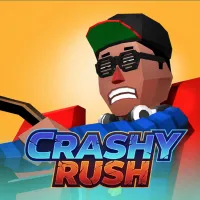

Crashy Rush is a fast-paced arcade game built around quick movement, careful timing, and the constant threat of crashing. The premise is easy to understand: keep moving through the course, react to what appears ahead, and try to survive for as long as possible. Its simple concept makes it accessible for casual players, while the increasing pressure keeps each attempt exciting.
The game works particularly well as a pick-up-and-play experience. You do not need to spend a long time learning complicated systems before getting into the action. Instead, the challenge comes from reacting quickly and learning from mistakes. Every crash can show you where your timing or positioning needs improvement.
The greatest challenge in Crashy Rush is maintaining control when the action starts moving quickly. Obstacles can force sudden changes in direction, turning what initially looks like an effortless path into a test of reflexes.
Rather than rushing blindly, it helps to watch the area ahead and make small adjustments before danger gets too close. A successful run often depends on:
This simple risk-and-reward loop gives Crashy Rush an arcade feel where even a short attempt can become a reason to try again.
Players who enjoy the quick reactions and obstacle-dodging style of Crashy Rush may also want to try:
Crashy Rush is an arcade-style game focused on movement, obstacle avoidance, quick reactions, and surviving for as long as possible.
The basic controls are simple, but mastering the timing and avoiding hazards consistently can take practice.
Pay attention to upcoming obstacles, avoid unnecessary movements, and use each failed attempt to understand where your timing or positioning went wrong.